

You bite into a sandwich, and a sharp jolt shoots through one specific tooth. It fades in a second, but it happens again at dinner, and now you are wondering if something more serious is going on. That kind of pinpoint pain, especially when it only shows up under pressure, often points to trouble with the nerve inside the tooth rather than the enamel on the outside.
If avoiding one side of your mouth while you chew is starting to feel like a habit, it is worth scheduling a digital dental exam so Cedar Creek Dental can find out what is happening before you need a root canal in Allentown, PA, to fix it.
The Difference Between Sensitive Teeth and a Damaged Nerve
According to the American Association of Endodontists, brief sensitivity to hot or cold food is usually harmless. Still, sharp pain when biting down is a different story. That kind of pain typically signals that decay, a loose filling, or a hidden crack has reached the pulp tissue inside the tooth.
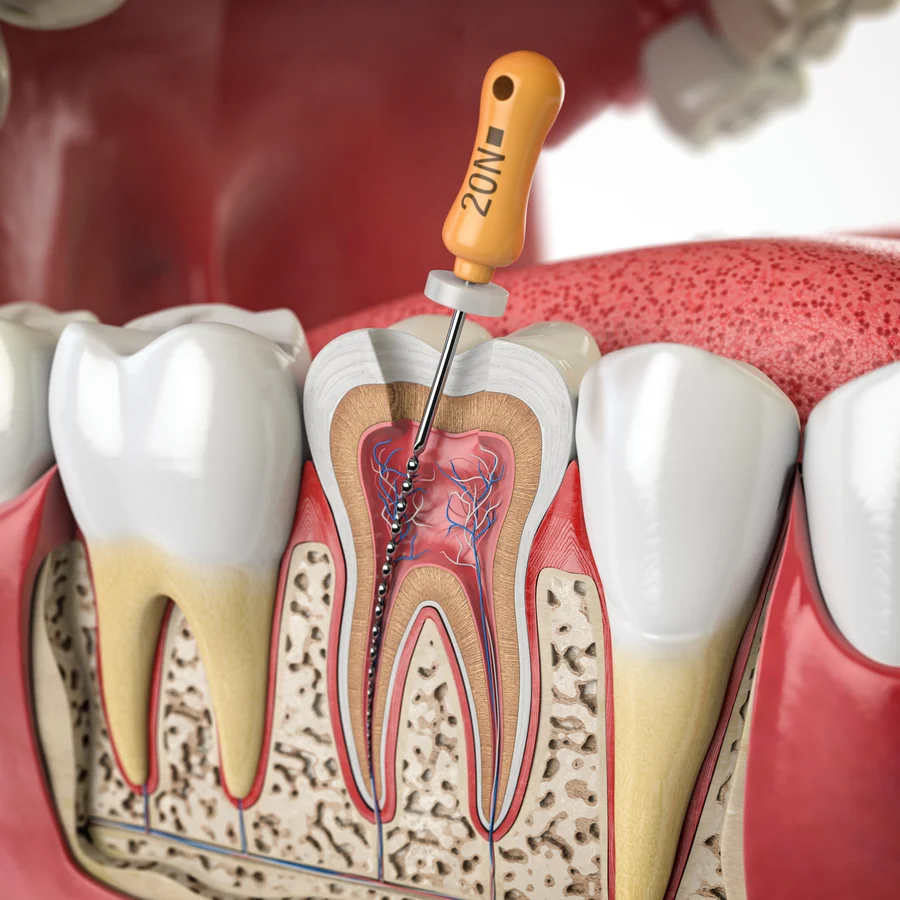
This layer houses the nerve and blood supply. Once that tissue is damaged, it will not heal on its own, which is why the discomfort tends to return every time you chew.
Signs the Nerve Is Already Involved
A few patterns tend to show up once the nerve is affected, and they are worth paying attention to:
- An ache that lingers for more than a few seconds after hot or cold food
- A dull pain that spreads toward the jaw or ear
- Swelling or tenderness in the gum near one specific tooth
- A small, pimple-like bump on the gums
If swelling shows up along the gumline, it may also be worth a periodontal evaluation to rule out a separate gum issue before assuming the pain is coming from the nerve.
What Causes This Kind of Nerve Damage
Nerve damage rarely appears out of nowhere. The National Institute of Dental and Craniofacial Research notes that untreated tooth decay is one of the most common starting points, since the bacteria that erode enamel can eventually reach the inner pulp if a cavity goes unaddressed.
A cracked tooth, an old tooth-colored filling that has worn down, or even a blow to the face during sports can expose that same vulnerable tissue. Once the nerve is inflamed or infected, over-the-counter pain relievers usually provide only a few hours of relief.
What a Root Canal in Allentown, PA Actually Involves
A root canal starts with a digital X-ray to pinpoint exactly how far the damage has spread. Once the area is numb, the damaged pulp is removed, the canal is cleaned and disinfected, and the space is filled with a material that seals out bacteria for good.
Because a treated tooth can become brittle over time, most patients end up with a custom dental crown on top to protect it during everyday chewing and biting.
When a Root Canal Isn't the Only Option
If pain started suddenly after an injury or a cracked filling, a same-day emergency visit may be the faster path to relief, since waiting even a day or two can allow an infection to spread into the surrounding bone. Each case in our office is evaluated individually.
Sometimes, a deep filling or a crown is enough to protect the tooth, and a root canal becomes necessary only when the nerve tissue itself is compromised beyond repair.

Ready for Relief? Schedule a Root Canal in Allentown, PA
Tooth pain that shows up every time you bite down is not something to wait out. If you are ready to find lasting relief with a root canal in Allentown, PA, Cedar Creek Dental is here to help you eat, chew, and smile without a second thought.
Contact us today to schedule an exam and get a clear answer about what that nerve pain has been trying to tell you.

